A training series for paraprofessionals and educators, supported by On-Site Behavior Coaches™ and BCBA® guidance.
Training is only the beginning.
TCP combines online learning with demonstrated proficiency and ongoing coaching so participants have support applying what they learn.
Knowledge + Proficiency + Support
After completing the online curriculum, participants demonstrate proficiency with an On-Site Behavior Coach™. The coach then provides continued feedback, check-ins, and support with guidance from BMC's behavior analysts.
Learn
Complete practical, self-paced online training.
Demonstrate
Show proficiency with an On-Site Behavior Coach™.
Keep Growing
Receive coaching, check-ins, and continued support.
See how the program works.
The COMPLETE Paraprofessional
An overview of the training, certification, proficiency, and support model.
Build coaching into the school itself.
The On-Site Behavior Coach connects online training to everyday implementation.
Rather than relying only on outside trainers, a qualified staff member is trained to support paraprofessionals within the school or district. This creates a consistent local resource for proficiency assessment, coaching, feedback, and continued learning.
Effective Training for Educators
Why effective professional development requires instruction, application, feedback, and continued support.
From training to everyday practice.
The coach creates a local system for maintaining what participants learned.
A well-rounded foundation for the paraprofessional role.
Understanding Behavior
Build a practical understanding of what influences behavior and why behavior occurs.
Classroom Environment
Use routines, expectations, structure, and environmental supports more intentionally.
Student Needs
Understand disability, communication, individual differences, and needed supports.
Proactive Approaches
Anticipate challenges and increase support before behavior escalates.
Reinforcement
Understand how reinforcement and adult responses influence future behavior.
Transitions, Tasks & Activities
Support participation, independence, and smoother movement through the school day.
Teamwork
Strengthen communication, consistency, and collaboration across classroom teams.
Behavior Support
Respond intentionally while keeping prevention, teaching, and student success at the center.
See the complete curriculum.
TCP moves from understanding the students being served to practical behavioral strategies, environmental support, reinforcement, function, and the paraprofessional’s role.
Introduction
- Who Do You Serve
- Behavior or Disability?
- Introduction Assessment
Autism Spectrum Disorder (ASD)
- Low and High Cognitive
- Social Functioning in ASD
- Social Responding in ASD
- Social Motivation in ASD
- Social Deficits in ASD
- ASD Part 1 Assessment
- Rigidity in ASD: Part 1
- Rigidity in ASD: Part 2
- Restricted Interest in ASD
- Sensory Preferences in ASD
- "The Meltdown": Challenging Behavior in ASD
- ASD Wrap Up
- ASD Part 2 Assessment
Emotional and Behavioral Disorder
- EBD Introduction
- Influence of History and Background in EBD
- Behavioral Strategies in EBD
- EBD Assessment
Role of the Environment
- Role of the Environment: Introduction
- Role of the Environment: Examples
- Role of the Environment: Classroom Example 1
- Role of the Environment: Classroom Example 2
- Role of the Environment: What is Distracting?
- Role of the Environment: What is Your Role?
- Role of the Environment Assessment
Behavioral Strategies
- Differential Attention
- Premack Principle
- Changing Patterns of Reaction
- Behavioral Strategies Assessment
Reinforcement
- Reinforcement Explained
- Reinforcement: Is it Always Reinforcing?
- Reinforcement Assessment
Functional Behavior
- Function: Introduction
- Function: Attention
- Function: Attention Strategies
- Function Assessment Part 1
- Function: Escape
- Function: Escape Strategies
- Function: Access Strategies
- Function: Wrap Up
- Function Assessment Part 2
Paraprofessional Role
- Paraprofessional Role: You Are the Key to Success
- Paraprofessional Role Assessment
A complete approach to paraprofessional development.
Online training provides knowledge. The BMC model adds certification, demonstrated proficiency, coaching, and ongoing support so learning has a better opportunity to become practice.
Online Training
Engaging, self-paced instruction builds the knowledge needed for the role.
Certification
Participants demonstrate understanding of the course content and core concepts.
Proficiency Assessment
Participants demonstrate that they can apply essential skills in practice.
Ongoing Support
Coaching, monthly check-ins, resources, and continued development keep learning active.
TCP gives schools a structure for confirming understanding, observing application, providing feedback, and continuing professional growth.
See the data behind the training.
Interactive TCP reporting
Explore program participation and outcomes through the interactive report.
Keep the momentum going.
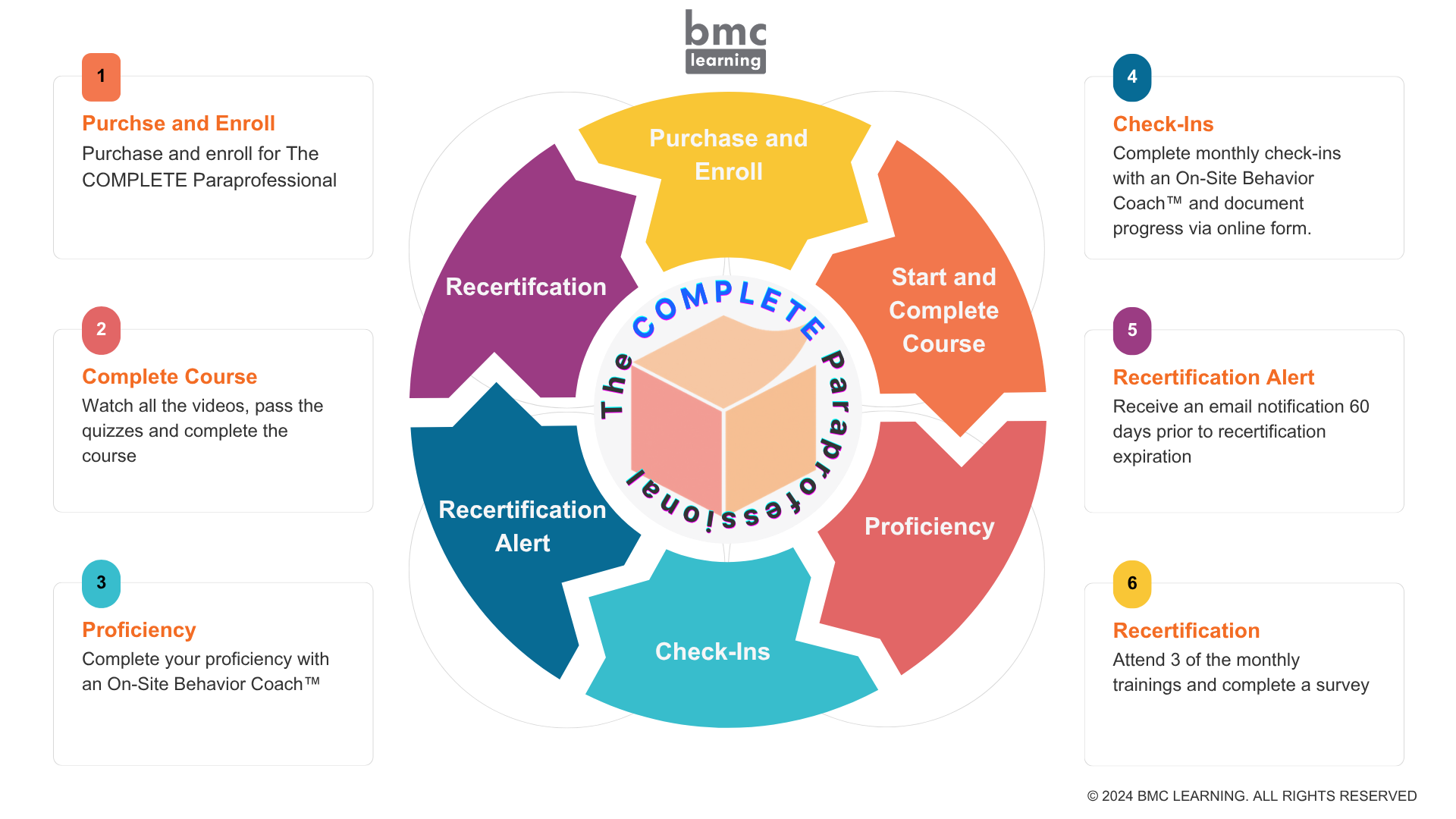
Certification is not intended to be a one-time professional development event.
Recertification gives participants an opportunity to revisit important concepts, maintain expectations, and continue strengthening their practice.
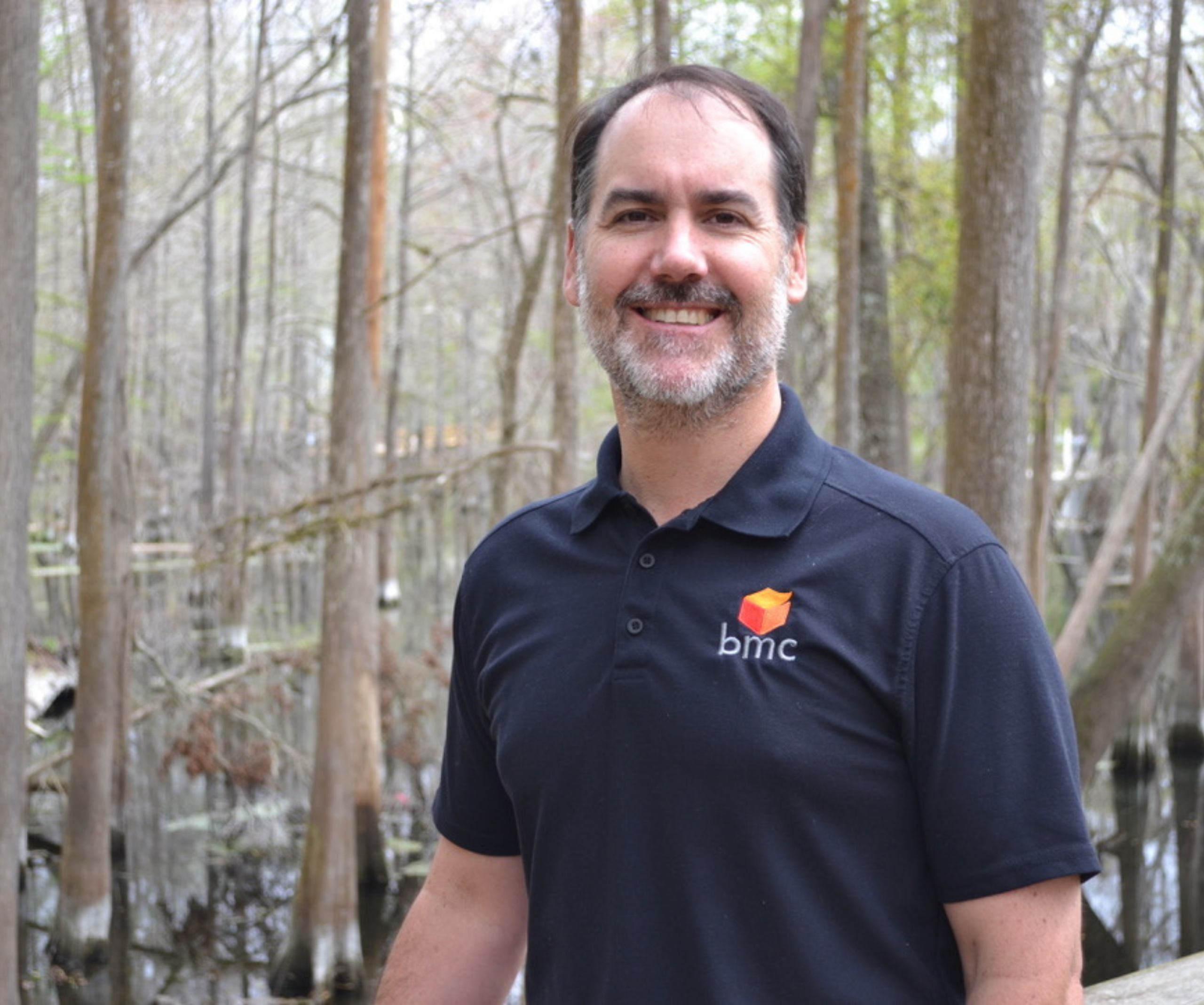
Dr. Baker Wright
Dr. Wright is the Team Leader and Owner of Behavior Management Consultants. Baker has been with BMC since 2000 and received his PhD from The Florida State University under the direction and guidance of Dr. Jon Bailey.
Dr. Wright’s clinical experience ranges from work with individuals of ages across the lifespan with challenges associated with Autism and other developmental disabilities, and those with other exceptional behavior challenges.
This includes work in residential facilities, schools, family homes, and supported and independent living arrangements for adults.
Most of Dr. Wright's experience over the last 20 years has been working as a consulting Behavior Analyst with multiple school districts across the Southeast, assisting students, classrooms, teachers, paraprofessionals, and administrators through direct consultation and training.
Feedback from educators using TCP.
The program is user-friendly, self-paced, and provides practical, informative content. It has helped create a more supportive environment where paraprofessionals feel comfortable asking for help and collaborating more effectively.
Coffee County School System
The COMPLETE Paraprofessional course changed my mindset, as well as the paraprofessionals I coach. I watched them become more confident in their actions through this course.
Coffee County School System
TCP gave us shared language and background knowledge about positive, proactive support. Monthly check-ins and coaching helped strengthen communication, relationships, classroom support, and the learning environment.
Build a sustainable training model for your team.
Professional Development Package
Specialized Development Package
Need more than 5 Professional Development Packages?
Contact us to customize and individualize a package to meet your school or district’s needs.
Pricing varies based on service.
Ready to strengthen paraprofessional training?
Contact us about implementation, purchasing, or a customized professional development package for your school or district.
Questions about The COMPLETE Paraprofessional?
What is The COMPLETE Paraprofessional?
The COMPLETE Paraprofessional (TCP) is a structured training and proficiency-based certification program designed to equip paraprofessionals with the skills needed to effectively support students with disabilities.
The course focuses on:
- Autism Spectrum Disorder (ASD)
- Emotional & Behavioral Disorder (EBD)
- Reinforcement and behavior management
- Functional Behavior Assessment (FBA)
- Proactive classroom strategies
- Team communication
- The professional role of the paraprofessional
How is TCP different from other trainings?
TCP does not stop at course completion; it ensures proficiency.
After the online training, paraprofessionals complete a structured proficiency check to demonstrate understanding through discussion and application
The goal is growth and mastery. Everyone passes; the scoring simply determines the level of support needed to be effective
What does the proficiency check include?
The proficiency check:
- Is completed in one sitting
- Includes oral questions and demonstrations
- Measures level of independence (Independent, Single Prompt, or Reteaching needed)
- Ensures practical classroom application
Is certification provided?
Yes. After completing the proficiency process:
- A certificate is issued
- Certification is valid for 1 year
- Schools receive expiration notifications
What is an On-Site Behavior Coach (OBC)?
An OBC is a school-based designee who:
- Conducts proficiency checks
- Provides monthly check-ins
- Observes classroom implementation
- Reinforces key training concepts
- OBCs receive their own structured preparation materials
What topics are covered?
TCP is organized into 8 core sections with a focus on applied, real-world implementation:
- Becoming an Effective Paraprofessional
- The Autism Spectrum
- Emotional & Behavioral Disorder
- The Role of the Environment
- Interaction Guidelines
- Reinforcement
- Functional Behavior
- The Role of the Paraprofessional
Does the training focus on punishment?
No. TCP emphasizes:
- Positive reinforcement
- Teaching replacement behaviors
- Understanding the function of behavior
Paraprofessionals learn the four functions of behavior:
- Attention
- Escape
- Access
- Sensory/Automatic
What happens after certification?
TCP includes ongoing monthly support, including:
- Online trainings
- Paraprofessional check-ins
- Designated “Subjects of the Month” (Reinforcement, Engagement, Team Communication, Proactive Strategies, etc.)
If three online trainings are completed during the year, recertification only requires a survey.
Who is TCP designed for?
School paraprofessionals
- Classroom aides
- Special education support staff
- Schools seeking structured, consistent paraprofessional development
What is the overall goal?
To develop paraprofessionals who are:
- Proactive
- Skilled
- Consistent
- Team-aligned
- Effective with students with disabilities
TCP ensures paraprofessionals understand both what to do and why they are doing it — and can apply it confidently in the classroom.